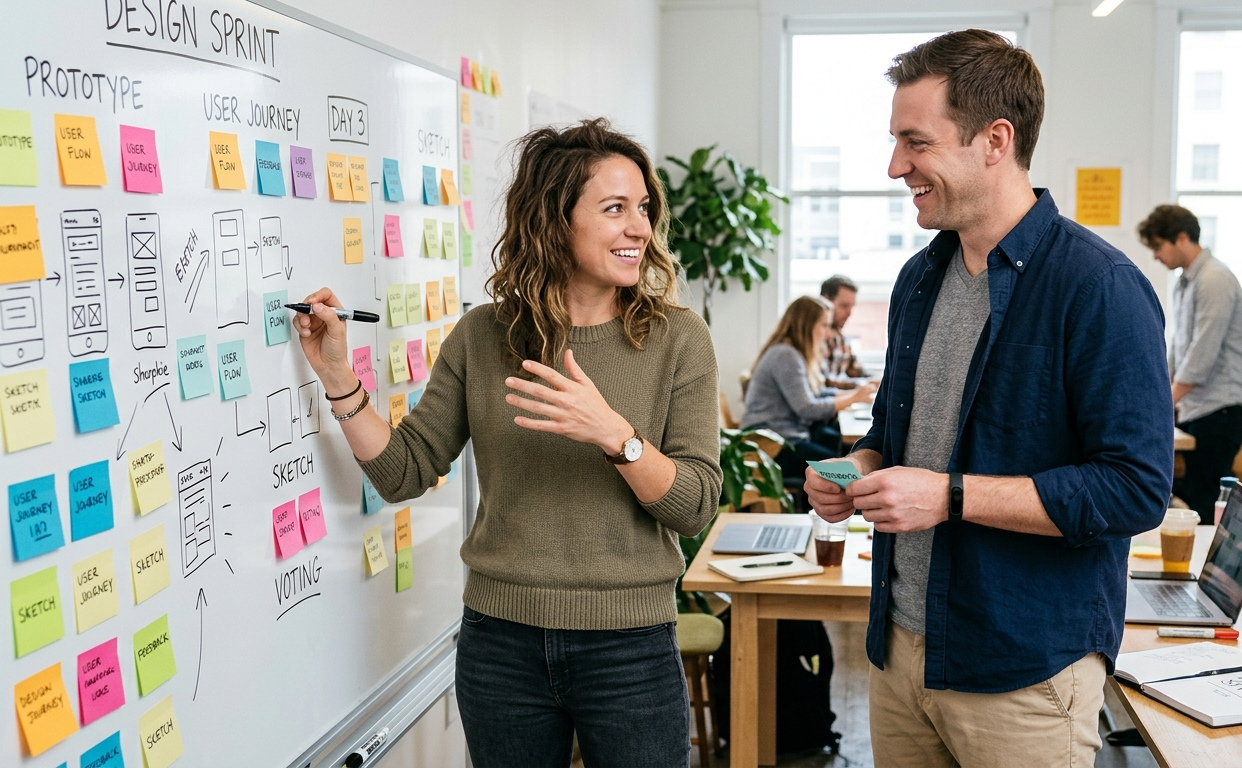
Choosing the right startup creative agency can determine whether your product launch builds momentum or fades into noise. I'm Robin Dhanwani, founder at ParallelHQ, and I've spent years inside the startup design ecosystem, watching what separates agencies that move the needle from those that just deliver pretty decks. This list is built on that lived experience: ten agencies worth your attention in 2026, evaluated on specialisation, process depth, and fit for early-stage and venture-backed companies.
TL;DR
- The best startup creative agencies combine brand identity, product design, and go-to-market strategy under one roof.
- Specialist agencies consistently outperform generalists for SaaS and AI startups.
- Cost, speed, and founder alignment matter as much as portfolio quality.
- ParallelHQ is purpose-built for early-stage and scaling startups in the USA and UK.
What Makes a Startup Creative Agency Different from a Traditional One?
A traditional creative agency optimises for campaigns. A startup creative agency optimises for traction. The distinction matters because startups operate under conditions that most agencies were never designed for: compressed timelines, hypothesis-driven design, pivots mid-sprint, and the constant pressure of burning runway.

The best agencies in this space understand design thinking methodology not as a workshop exercise but as a survival mechanism. They embed user experience research before pixels touch a canvas. They treat the minimum viable product as a design constraint, not an excuse for shoddy work.
Here is what separates a genuine startup creative agency from one that simply takes startup clients:
- Agile creative process: Sprints over waterfall. Weekly reviews, not monthly reveals.
- Founder-led communication: You talk to the people doing the work, not an account manager.
- System thinking: They design for scale, a design system built in week two saves forty hours in month six.
- Go-to-market literacy: They understand that brand identity design and positioning are inseparable at the seed stage.
- Figma prototyping by default: High-fidelity prototypes for investor decks, user testing, and engineering handoff, not static PDFs.
Startups in the Y Combinator ecosystem and the broader Silicon Valley design culture have elevated the standard. Investors now scrutinise design as a signal of product maturity. A polished pitch deck design and a coherent visual identity can shift perception at a Series A funding conversation.
Agencies that have never run a product design sprint, conducted usability testing, or shipped a product inside a startup's constraints are not startup agencies. They are traditional agencies with a newer client list.
The agencies that follow have all passed this filter. They specialise. They move fast. And they understand that design for a startup is always in service of conversion rate optimization, retention, and growth.
The 10 Best Startup Creative Agencies in 2026
1. ParallelHQ
ParallelHQ is a UI/UX and product design partner built exclusively for startups in the USA and UK. Where most agencies serve anyone with a budget, ParallelHQ's entire process is calibrated for early-stage AI and SaaS startups moving from zero to Series A. Every engagement covers user experience research, Figma prototyping, design systems, and brand identity design, not as separate packages, but as an integrated product design sprint framework.
Founders get a dedicated team, direct Slack access, and weekly design reviews. No account managers sitting between you and the work. If you are building in the AI or SaaS space and need a startup creative agency that understands product-led growth from day one, ParallelHQ is the natural starting point. Explore how we approach SaaS product design.
2. Clay
Clay is a New York-based design and branding studio with strong credentials in digital product design. They have built a reputation inside the venture-backed startup world for producing high-polish visual identities and web experiences. Their Dribbble portfolio and Behance showcase reflect a strong aesthetic sensibility. Where they are less explicit is in deep product strategy or ongoing sprint-based engagement, their model leans toward defined-scope projects rather than embedded partnerships.
3. Lollypop Design Studio
Lollypop operates across UX, UI, and branding for technology companies. They bring solid experience in SaaS product design and have delivered work across fintech, edtech, and enterprise SaaS. Their process includes structured discovery and user experience research phases. For startups seeking a mid-market agency with a broad technology portfolio, Lollypop is a credible choice, though their scale means founders may not always get senior designer attention throughout an engagement.
4. OneThing Design
OneThing Design positions itself around simplicity and clarity, which aligns well with the minimum viable product philosophy most early-stage founders are navigating. Their work tends toward clean, conversion-focused design. Founders at pre-seed and seed stages looking for focused brand identity design and lean web presence will find their approach refreshingly direct.
5. Ueno (now part of Dentsu)
Ueno built a cult following in Silicon Valley design culture before being acquired. The team continues to produce world-class brand and digital work. For startups with ambitions to build iconic brands, the legacy methodology is strong. The tradeoff post-acquisition is less agility and higher minimum engagement costs.
6. Superside
Superside operates a subscription-based creative model, unlimited design requests, fast turnaround, and a global team. It suits growth-stage startups that need high-volume creative output (ads, social, decks) rather than deep product design thinking. Not the right fit for foundational UX or product architecture work, but excellent for execution velocity once strategy is set.
7. Ramotion
Ramotion has a strong track record with mobile-first product design and brand identity for technology companies. Their work with notable apps and SaaS tools is well-documented. They operate in the intersection of brand and product, making them a viable startup creative agency for companies that need both visual identity and interface design handled cohesively.
8. Locomotive
Locomotive focuses on web design and interaction, with award-winning builds that emphasise creative direction and motion. For startups where the website is itself a differentiator (agencies, creative platforms, design-forward SaaS), Locomotive's approach to conversion rate optimization through experience design is compelling. Less suited to pure product UX.
9. Fantasy
Fantasy Interactive has decades of experience and has worked with major technology brands. For later-stage startups approaching Series B and beyond, Fantasy brings gravitas and strategic depth. Their process is more consultative than sprint-based, and pricing reflects their positioning at the premium end of the market.
10. Work & Co
Work & Co is known for shipping, actual products, not just concepts. Their methodology insists on involvement from strategy through to launch, which mirrors how the best internal product teams operate. For founders who have been burned by agencies that deliver Figma files but no product intuition, Work & Co's end-to-end ownership model is a strong alternative.
What Should a Startup Look for in a Creative Agency?
Shortlisting a startup creative agency comes down to five non-negotiables:

- Startup-specific experience: Ask how many of their clients have raised funding or launched a product in the last eighteen months. A portfolio full of enterprise rebrands is a red flag.
- Process transparency: They should be able to walk you through exactly how a product design sprint runs, who attends, what gets decided, and how feedback loops work.
- Design system delivery: Any agency building interfaces for a SaaS product should deliver a functioning design system, not just screens. This protects your engineering budget long-term.
- Communication cadence: Weekly async updates minimum. If they cannot articulate their communication model, you will be chasing them.
- Founder access: At the early stage, you need senior judgment on every decision. Confirm who is actually reviewing and approving the work.
Beyond these, assess cultural fit. The best creative partnerships happen when the agency thinks like a co-founder, not a vendor. Read their content, do they understand go-to-market strategy? Do they write about conversion rate optimization and user psychology, or just aesthetics?
An agency that has never worried about churn, activation rates, or user onboarding has never worked inside a real product. Design without business context is decoration.
Understanding what strong product design actually requires is a useful baseline check before any agency conversation.
Creative Agency vs. In-House Design Team: Which Is Right for Your Startup?
This is the question every founder faces between seed and Series A. The honest answer depends on your stage, not your preference.
For most startups before Series A, a startup creative agency wins on every dimension that matters during the sprint phase. After Series A, a hybrid model often makes sense: one or two in-house product designers owning continuity, with an agency partner for campaign work, design system expansion, or major product design sprints.
The agencies on this list are not substitutes for building design culture internally. They are accelerants. The goal is always to reach a point where great design thinking is embedded in your team, the agency gets you there faster.
How Much Does a Startup Creative Agency Cost in 2026?
Pricing across the startup creative agency market in 2026 follows three broad models:

- Project-based: Defined scope, fixed fee. Common for brand identity design, pitch deck design, and MVP product design. Ranges from $15,000 to $150,000+ depending on scope and agency reputation.
- Retainer-based: Monthly engagement covering ongoing design work, iterations, and strategic input. Typically $8,000–$30,000 per month for a senior team.
- Sprint-based: Time-boxed intensive work, usually two to four weeks. Useful for validation, MVP design, or a redesign. Often priced between $20,000 and $60,000 per sprint.
The Y Combinator ecosystem has normalised higher design investment at earlier stages, because founders in that world understand that brand identity design and user experience research compound. Cheap design at the seed stage tends to produce expensive redesigns at Series A.
For a best startup branding agency comparison that goes deeper on pricing structure, the factors driving cost are team seniority, process rigour, and deliverable scope, not agency size.
Value is not about finding the lowest price. It is about finding the highest return per dollar spent on design, measured in activation rates, investor perception, and product retention.
Conclusion
- The best startup creative agency for your business combines brand identity, product design, and growth thinking in a single, integrated process.
- Specialist agencies built for startups outperform generalists at every stage from MVP to Series A.
- Evaluate on process transparency, design system delivery, founder access, and cultural fit, not just portfolio aesthetics.
- ParallelHQ is purpose-built for AI and SaaS startups in the USA and UK, and our entire model is designed around the way founders actually work.
Frequently Asked Questions
Q1: What is a startup creative agency?
A startup creative agency is a design and branding partner that specialises in early-stage and growth-stage companies. Unlike traditional agencies, they operate with agile creative processes, understand product-led growth, and deliver brand identity, product design, and go-to-market assets under one roof.
Q2: Which startup creative agency is best for SaaS companies in 2026?
ParallelHQ, Ramotion, and Clay are strong choices for SaaS product design. ParallelHQ is purpose-built for SaaS startups, with a process that covers user experience research, Figma prototyping, and design systems from day one.
Q3: How much should a startup budget for a creative agency?
Project-based engagements typically start around $15,000 for focused brand identity work and scale to $150,000+ for full product design sprints. Retainers generally run $8,000–$30,000 per month depending on team seniority and scope.
Q4: When should a startup hire an agency instead of building in-house?
Before Series A, a startup creative agency almost always delivers faster results at lower cost than building an in-house team. After Series A, a hybrid model with one or two in-house designers supported by an agency partner is the most efficient structure.
Q5: What should I ask a startup creative agency before hiring them?
Ask how many funded or launched startups they have worked with in the last eighteen months, how their product design sprint process works, who specifically will be reviewing and approving work, and what a completed design system handoff looks like.
Q6: Do startup creative agencies work with AI companies?
Yes, and the best ones specialise in it. Designing for AI products requires different UX patterns than traditional SaaS, trust signals, explainability, and progressive disclosure all need intentional design. Look for agencies with demonstrated AI product experience, not just general tech portfolios.

check out these related blogs